| Intermediate Technology Education | Control Technology | Design Stage 2 | Topic 6 | Optional Activity 8 |
Turn Signal Control
- Become familiar with the function and purpose of a computer control device.
- Learn how to connect two lights to the control device.
- Learn how to use a software program to control the lights.
- Control the simulated turn signal lights with a simple switch arrangement.
Turn and Hazard Signals
Turn and hazard (emergency) signals are an extremely important part of the safety equipment on any vehicle.
On older cars and trucks the device that causes the lights to flash is among the lowest "tech" components that make up the vehicle. In fact, the "thermal flasher" is closely related to the special bulbs that cause Christmas tree lights to flash. This device consists of a special metal that bends when heated and opens and closes the circuits to the turn signal lights. Although cheap and reliable, the thermal flasher won't work if one of the lights is burnt out.

Figure Thermal
Flasher (Trico)
Most modern vehicles use electronic circuits to control the flashing of the turn signals. These circuits use no moving parts such as switch contacts and are very reliable. In addition they will work even though a light may be burned out in the circuit.
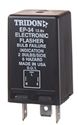
Figure Electronic
Flasher (Trico)
Using a computer and control interface circuit you can simulate how signal lights work. In addition you can change the flash rate, something you can't do with the circuit in a car!
When you are ready, go to Your Turn
 Copyright
2006 Virtual Ink Ltd. Used under license
Copyright
2006 Virtual Ink Ltd. Used under license